

All times refer to UK time, unless otherwise stated.
James Low, April 2026 writes: The traditional structure of Buddhist teachings is that each level or vehicle has its own View, Meditation, Activity and Result. Over the years I have focused on making the various views and meditations as clear as possible and you can access these through my many audio and video recordings, books and transcripts.
I feel that our retreats now need to have increasing emphasis on your activity and proactive learning.
We all have a lot of life experience and so how can we mobilise this experience to become an ally on our path instead of an obstacle? Rather than relying on our habitual assumptions and conclusions, our practice is to investigate how our subjectivity arises in different situations. We aim to locate the ground (or basis) for our subjective thoughts, feelings and actions in our simple presence within the ever-open here and now.
I will be teaching in the mornings. In the afternoons there will be small group activities led by experienced members of our sangha. They will offer a range of activities and I am encouraging you all to try them out so that you can experience what you can make use of (or not) at each moment in time. The key point is for you to observe what arises for you as you engage with each activity in your ever-changing environment.
The aim in dzogchen is to see the self-vanishing of each moment. We do this by ripening our presence without engaging in dualistic reificatory judgement.

- This event has passed.
Lama Vajranatha
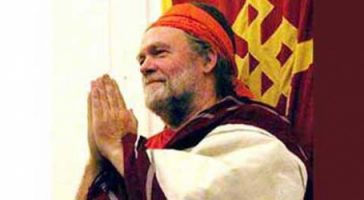
Dzogchen Teachings in the Longchen Nyingthik
In Tibet in the 18th cen., Jigmed Lingpa revived the Dzogchen Upadesha teachings of Padmasambhava and Vimalamitra known as Nying-thik, “the essence of the mind.” He had followed in the earlier footsteps of Longchenpa (14th cen.) who systematically collected these transmissions. Furthermore, it was said that there were a number of teachings that Longchenpa did not have the opportunity to set down in writing in his own lifetime. While in retreat in the Chimphu cave in Central Tibet, Jigmed Lingpa had a series of visions where Longchenpa actually appeared to him and dictated these teachings to him. He set them down in writing with the title of the Longchen Nyingthik, “the essence of the mind of the great vast expanse,” that is to say, Longchenpa. In 19th and 20th century Tibet, this became the most widespread and popular series of Terma teachings among Nyingmapa Tibetans. In this seminar, we shall look into this Terma series of teachings, both Tantra and Dzogchen, but especially the latter.